


Let's start the transformation together.
What to Plan Before Renovating a Landed Home in Singapore
What to Plan Before Renovating a Landed Home in Singapore
A landed home brings its own opportunities: several floors, stairs, gardens, terraces and often a roof you can use. It also asks for more planning. Here are the things we suggest every owner thinks through before the renovation begins.
1. Start with how you want to live, and how you want to feel
Before looking at materials or colours, think about the people in the house. Who lives here now, and who might in ten years? Do you need a bedroom on the ground floor for parents, a quiet room to work from home, or space for children to grow? Do you entertain often?
Just as important is how you want each space to feel. Perhaps calm and restful in the bedrooms, warm and welcoming where the family gathers, or quietly grand when guests arrive. We design with intention: the light, materials, colours and proportions in every room are chosen to create the feeling you and your family want to come home to.
2. Decide the scope of works
There are three broad routes. An interior renovation updates the house within its existing structure. Addition and alteration (A&A) works change the building itself, such as adding space, reworking the layout or rebuilding the roof. A new build starts again from the ground. The route you choose shapes the team you need, the approvals involved and how long the project takes, so it is worth deciding early.
3. Know your type of house
Terrace, semi-detached, detached, cluster and strata houses each come with their own possibilities. Cluster and strata homes are usually part of a managed estate, which may have rules on external works, facades and working hours. It helps to check these before the design is drawn.
4. Check the house before you design
Many landed homes in Singapore are older, and some issues only show up once works begin. Before finalising the design, look at the roof, waterproofing, wiring, plumbing and any signs of termites or damp. Fixing these first protects everything that comes after, and it is wise to keep part of the budget aside for anything unexpected.
5. Plan the whole house as one
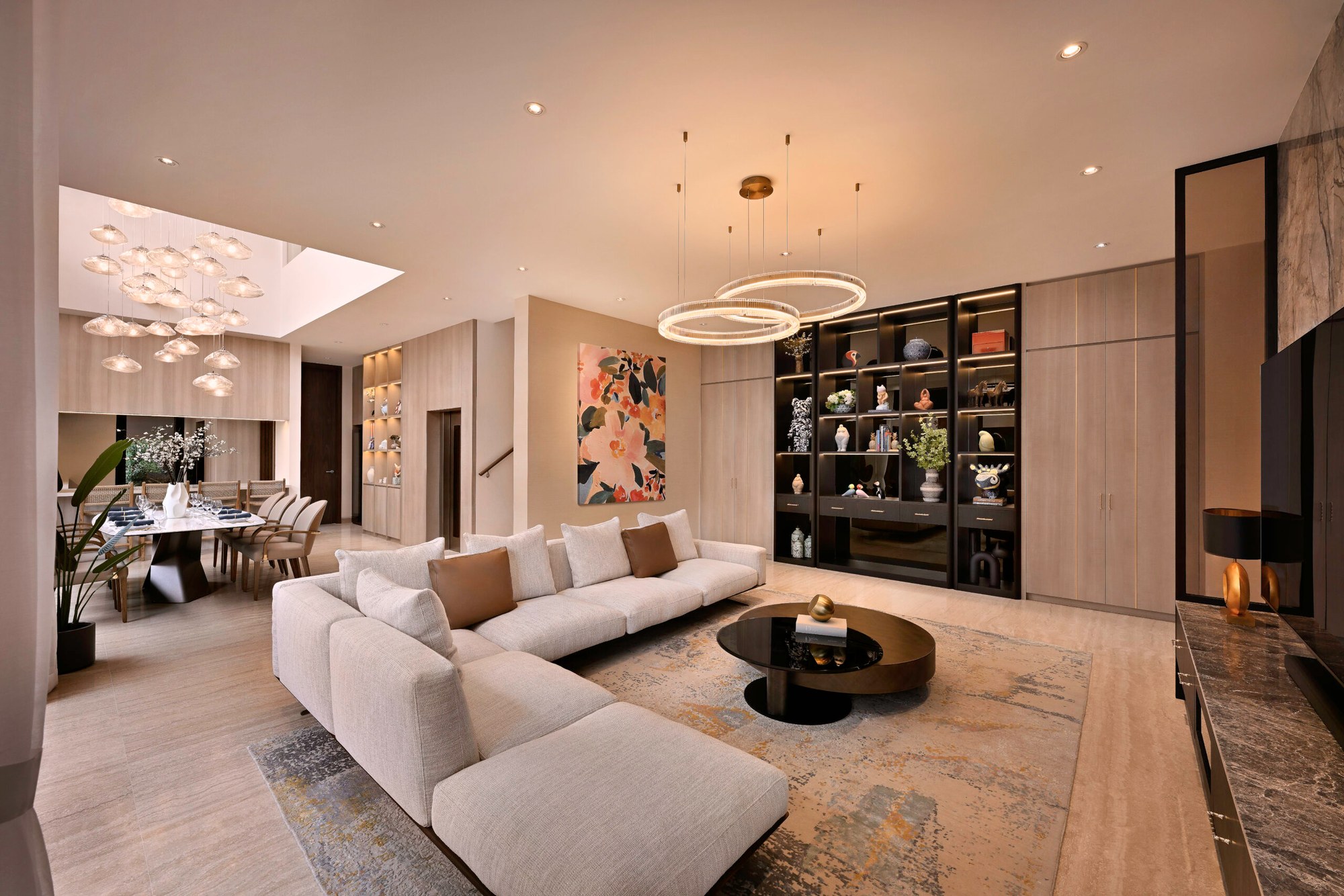
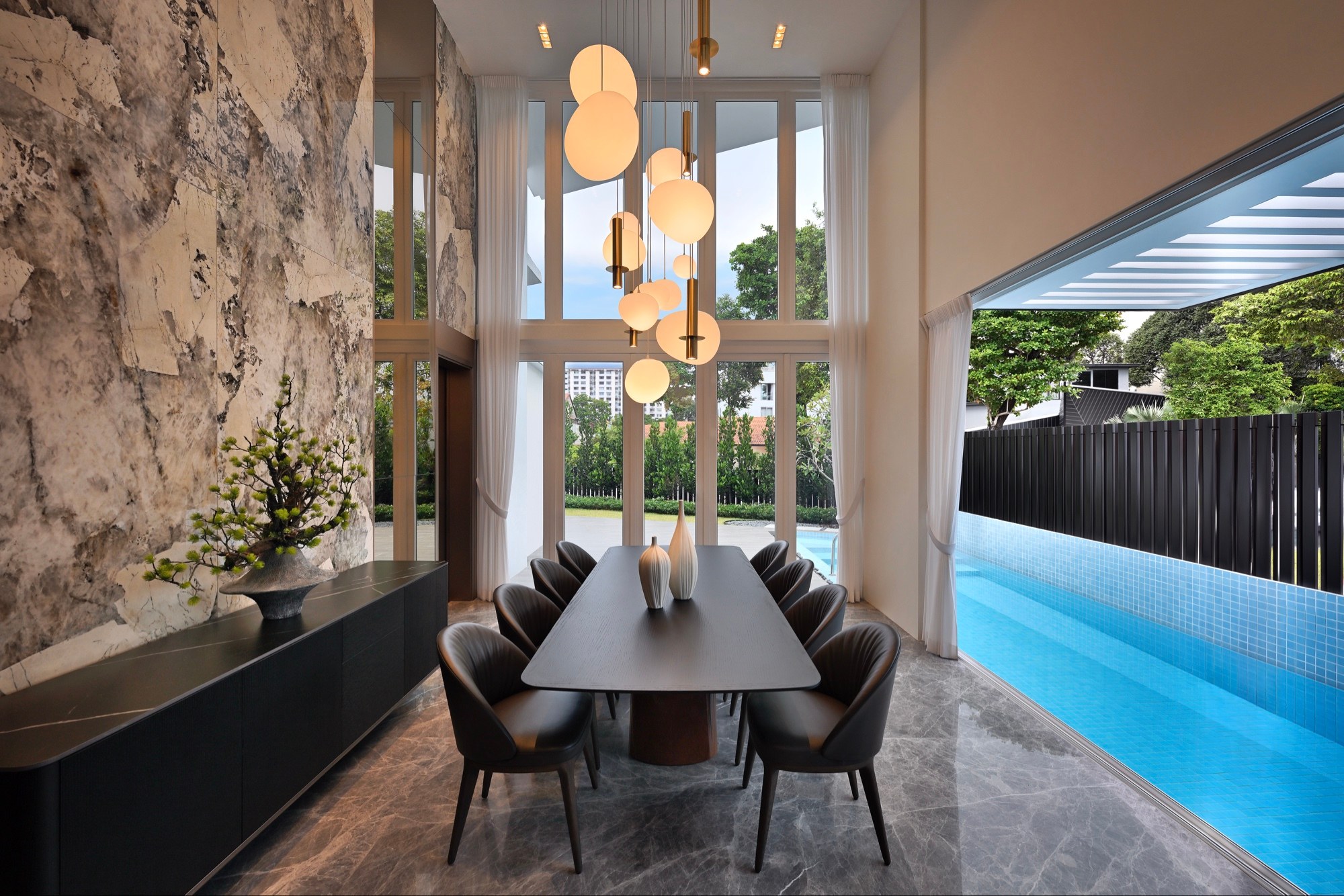
A landed home works best when every floor feels connected. Think about how natural light enters, how the staircase links each level, and how the inside flows out to the garden or terrace. Air-conditioning, ventilation, lighting and storage should be planned at the design stage, not added at the end, so they sit quietly within the interior.
6. Bring the right team together early
For A&A works and new builds, you will need an architect and a builder, and the necessary approvals are handled by the architect. Involving your interior designer from the start means the layout, lighting and joinery are planned alongside the building works rather than fitted around them afterwards. If you do not have an architect or builder, we can bring in our own team. If you already have one, we are happy to work alongside them.
7. Agree on priorities, budget and schedule
Every landed project is different, so cost and timing depend on the size of the house, the scope of works and the materials chosen. Decide what matters most to you, whether that is the kitchen, the main bedroom or the living spaces, and share it with your designer. Settling decisions early, before works start, helps avoid changes midway that can add cost and time.
Questions to ask your designer
Can I see landed homes you have completed, of a similar type to mine?
Who will I work with from the first meeting to handover?
How do you work with architects and builders on A&A or new-build projects?
What is included in the quotation, and how are changes handled?
How we can help
Prestige Global Designs is an award-winning luxury interior design firm in Singapore, founded in 2008. We design terrace, cluster, strata, semi-detached and detached homes, from full interior renovations to A&A projects and new builds, and you work directly with our founders from the first consultation to the final reveal.